
5 Signs Your Phone System Is Holding Back Your Company’s Growth

In the race toward digital transformation, telephony has paradoxically become the poor relation of corporate strategy. Companies invest heavily in advanced CRMs, sophisticated marketing automation tools, and collaborative project management platforms. Yet at the very heart of customer relationships, the old phone system—whether it’s a dusty physical PBX tucked away in a server room or a rigid, aging IP-based solution—continues to operate in complete isolation.
In 2026, telephony can no longer be treated as a basic utility, like electricity or running water. It has become a strategic intangible asset. If your current system still does little more than make phones ring in a linear way, chances are it is actively slowing down your commercial growth. Obsolescence is no longer just technical—it is operational and financial. Here are the 5 warning signs that show your phone infrastructure is costing you more than it delivers, and how moving to Unified Communications as a Service (UCaaS) can unlock your growth potential.
Sign 1: Your Call and WhatsApp Data Is Scattered Everywhere
This is the most common—and arguably the most dangerous—symptom for the long-term sustainability of your sales know-how. In the vast majority of under-equipped organizations, sales teams rely on personal smartphones or private WhatsApp accounts to communicate with prospects and customers.
The Hidden Risk of Voice “Shadow IT”
“Shadow IT” refers to tools used by employees without the approval or oversight of the IT department. When a sales rep leaves your company to join a competitor, what happens to the history of their customer interactions? If calls aren’t logged and WhatsApp messages live on a personal device, you instantly lose a goldmine of information. You lose the memory of the customer relationship.
Here, obsolescence reveals itself through a chronic inability to centralize communication flows. Without this centralization, your CRM becomes little more than an empty shell, as the most valuable human interactions take place outside its walls.
The Strategic Solution: Full Channel Unification
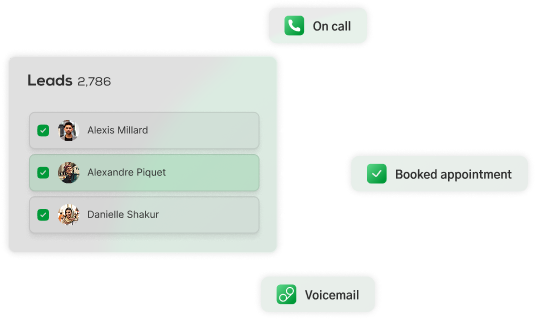
A modern unified communications system captures every interaction at the source. Whether the exchange happens via a traditional GSM call, a text message, or a Teams meeting, everything is automatically synchronized and logged in your CRM. The data belongs—both contractually and technically—to the company, not to a physical device.
This enables seamless handovers when team members change, holistic analysis of your sales funnel health, and protection of your most valuable intangible asset: your customer database.
Sign 2: Your Telecom Bills Are Opaque, Rigid, and Unpredictable
Take a few minutes to look at your latest telecom invoice. If it resembles a complex archaeological inventory of analog lines, PBX maintenance fees, and per-minute international call charges, you are dealing with an end-of-life system.
The Dead Weight of Fixed Costs (CAPEX)
Traditional telephony requires heavy upfront hardware investments and rigid multi-year contracts. The main issue? You pay for a theoretical maximum capacity (the number of channels on your line) that you may only use 10% of the time, except during peak periods. This is an inefficient allocation of financial resources.
By contrast, UCaaS operates on an agile subscription model (OPEX) that adapts to actual usage.
Cloud Transparency and Elasticity
In 2026, managing your telephony should be as simple as managing a SaaS application. You should be able to adjust the number of licenses in real time to match your activity perfectly:
- Rapid growth: Hiring 5 interns or 10 sales reps for a seasonal campaign? Add lines in one click—no technician required.
- Seasonality: Scaling down after a busy period? Instantly remove unused licenses.
This financial agility isn’t just an accounting convenience—it’s a growth lever that frees up budget to reinvest immediately in high-ROI marketing initiatives.
Sign 3: Remote Work and Mobility Are Technical Headaches
The way we work has fundamentally changed between 2020 and 2026. If enabling an employee to work effectively from home still requires complex call forwarding to their personal mobile phone, your system is clearly running out of steam.
Reachability vs. Privacy
An outdated phone system ties a phone number to a physical device plugged into a wall socket—or at best, to a fixed IP address. This rigidity is incompatible with modern mobility. In 2026, a professional phone number must be linked to a user’s identity, not their location.
A high-performing sales rep should be able to answer calls on their office computer, on their smartphone while commuting (via native GSM for reliability), or on a tablet at a customer site—without ever sharing their personal phone number.
Employee Experience as a Hiring Advantage
Top talent today expects flexible work tools. A system that forces employees to be physically present in the office to manage calls or access voicemails is a major deterrent for younger generations. It significantly hampers recruitment and retention of high-potential profiles.
Native, seamless mobility is no longer a “nice-to-have”—it’s a prerequisite for operational survival and employer attractiveness.
Sign 4: You Have No Real Operational Data on Your Call Activity
“How many inbound calls did we miss yesterday during lunch break?”
“What is the average call duration of our top-performing sales reps?”
“At what time of day do customers try to reach us the most?”
If you can’t answer these questions in two clicks from a dashboard, you’re running your sales and customer service teams blind.
The Lack of Voice Intelligence
Obsolescence also means having zero visibility into what’s happening in your communication pipelines. Without data, optimization is impossible. You may not realize that prospects wait an average of four minutes before someone answers, or that your IVR is so complex and poorly designed that it drives 30% of callers to hang up before reaching a human.
That’s direct revenue loss—every single day.
Data-Driven Management
Modern cloud telephony solutions provide real-time analytics and predictive insights. You can identify peak call volumes to optimize staffing schedules and use call recordings as coaching material for sales teams.
By turning voice into actionable data, you transform telephony from a passive cost center into a dynamic, optimized profit driver.
Sign 5: Your Telephony Doesn’t Leverage AI Advances
We are living through an unprecedented technological revolution driven by generative AI. If your phone system still does nothing more than play hold music and route basic audio flows, you are missing out on a massive productivity leap—one that could give you a decisive competitive edge.
Falling Behind on Automation
AI-powered UCaaS systems in 2026 enable everyday breakthroughs:
- Instant transcription: Every call is transcribed into text, enabling keyword searches across conversation histories.
- Automatic summaries: AI generates call summaries and identifies action items at the end of each call, pushing them directly into your CRM.
- Sentiment analysis: The system can alert managers in real time when a customer call turns negative, enabling quick intervention to preserve the relationship.
A system incapable of integrating these software building blocks forces your teams into time-consuming, frustrating, low-value manual tasks—when they should be focusing on negotiation and strategy.
From Diagnosis to Strategic Action
If you recognize at least two of these signs within your organization, it’s time to seriously consider a migration. Sticking with an outdated phone system isn’t just a matter of technical comfort or user preference—it’s a major strategic risk that directly impacts profitability.
Your most agile competitors are already using unified communications to move faster, track interactions more accurately, and stay much closer to customer needs.
The good news? Transitioning to a modern UCaaS solution is now simpler, faster, and far less costly than keeping an aging infrastructure on life support. It is likely the most immediate and highest-ROI investment you can make to unlock your company’s growth and prepare your teams for the challenges of 2026.
Turn your telephony into a growth engine—starting today!
Don’t let an outdated phone system limit your commercial ambitions or frustrate your teams.
Discover the Un1ty solution for free
Unify your voice and data.
Test the power of connected telephony.

.png)
.png)
.png)
