
Refurbished mobile: why IT departments should raise their standards
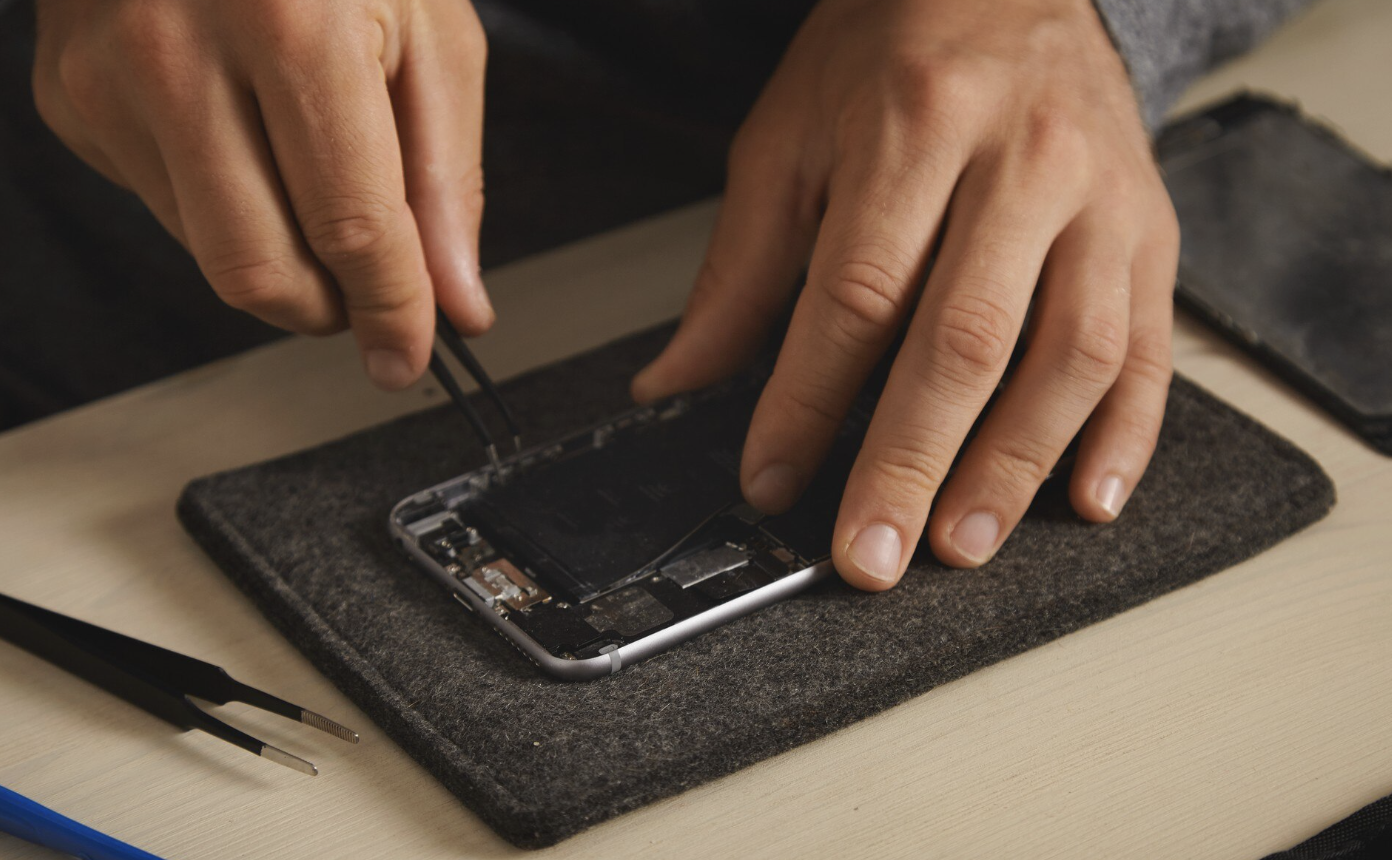
In many IT departments, refurbished devices are still seen as the default choice when budgets are tight. Not as a strategy, but as a compromise. And that perception alone is enough to preserve the status quo: order new devices, renew every 24 months, and never really question why.
Yet the arguments that once justified this caution are gradually disappearing. The security of refurbished devices has significantly improved. Performance is comparable for the vast majority of professional use cases. Total cost is structurally lower. And the environmental impact avoided is measurable — and therefore reportable within CSR frameworks.
This is no longer about compromise. It is about updating standards.
Refurbished Mobile Security: The First Objection — and the First Myth to Dismantle
This is the standard concern raised by IT departments: a refurbished device is a device with an unknown history, and therefore a security risk. The concern is understandable — but increasingly outdated.
A refurbished device handled by a professional-grade refurbishment partner undergoes a rigorous process:
- certified data wiping based on recognized standards such as NIST 800-88 or DoD 5220.22-M,
- full hardware integrity checks and complete operating system reset.
The result: a device in the same functional condition as a new one, with no residual data from previous use.
The real security question is no longer “Has this device been used before?” but rather “Does the refurbishment process guarantee its integrity?” A certified refurbisher answers that question clearly.
To safely adopt refurbished devices, here are the minimum guarantees IT teams should require:
- certified data erasure with traceable reporting,
- complete functional testing of every component, including the battery,
- warranty coverage comparable to manufacturer standards,
- compatibility with existing MDM solutions,
- large-scale deployment capabilities via Apple Business Manager or Android Enterprise.
These are standard practices among reputable professional refurbishers. If a provider cannot meet these requirements, they are simply operating in the wrong category.
TCO: The Real Cost of New vs. Refurbished Mobile Devices
The purchase price of a smartphone represents only the visible portion of its total cost. TCO (Total Cost of Ownership) also includes rapid depreciation, fleet management costs, replacement costs in case of damage or failure, and residual value at end of lifecycle.
Over a 36-month cycle, a refurbished mid-range smartphone costs on average 30% to 50% less than an equivalent new premium device, while delivering identical performance for standard business use cases: calls, messaging, business applications, video conferencing, and browsing.
Depreciation is also significantly more favorable: a refurbished device has already undergone its steepest value drop during the first months of its life. Its residual value after 36 months is proportionally more stable than that of a brand-new device purchased at full price.
For an IT department managing a fleet of 200 to 500 devices, moving from a 24-month new-device renewal cycle to a 36-month refurbished-device cycle can represent savings of tens of thousands of euros over three years — without any measurable degradation in user experience.
A refurbished iPhone that is two generations old still runs standard business applications flawlessly. A refurbished mid-range Samsung Galaxy easily handles Microsoft 365, Salesforce, and unified communication suites. Use cases that genuinely require the latest processing power remain rare in standard professional environments.
For 90% of employees, a high-quality refurbished device is indistinguishable from a new one in day-to-day use.
Refurbished Devices = Avoided Carbon Impact: A Tangible CSR Advantage
Manufacturing a smartphone is by far the most carbon-intensive stage of its lifecycle. According to ADEME, it represents between 70% and 85% of a device’s total emissions. The usage phase and end-of-life processing contribute relatively little by comparison.
This has a direct consequence: extending the life of an existing device — or choosing refurbished instead of new — avoids a significant share of the emissions associated with manufacturing an additional device. A refurbished smartphone is estimated to avoid between 30 and 70 kg of CO₂ equivalent compared to purchasing a new device, depending on the model and supply chain.
For a fleet of 200 devices, switching to refurbished equipment represents between 6 and 14 tons of CO₂ equivalent avoided per renewal cycle. A measurable, verifiable figure that can be directly integrated into Scope 3 carbon reporting or CSR reporting.
This is precisely the type of data CSR teams are looking for when building sustainability reports: measurable impact tied to a concrete operational decision, with no approximation required.
Toward a Responsible Procurement Policy for Business Mobile Devices
Integrating refurbished devices into IT procurement policies is not a symbolic gesture. It is a structural decision that aligns three objectives often presented as contradictory:
- cost control,
- operational performance,
- environmental responsibility.
A few organizational levers make all the difference.
Start by defining eligibility criteria by user profile: not all employees have the same needs, and mapping these profiles helps identify exactly which roles can transition to refurbished devices without friction.
Then integrate refurbished devices into procurement and RFP processes: your next telecom or hardware negotiation is the perfect opportunity to include refurbished devices as a standard option, with contractually defined quality criteria instead of case-by-case decisions.
Finally, measure and communicate the impact: every refurbished device chosen instead of a new one represents measurable avoided impact for CSR reporting.
The telecom operator also plays a central role in this approach. An operator offering refurbishment solutions, device buyback programs, and environmental traceability becomes a true partner in responsible procurement — not just a connectivity provider.
Your Refurbished Business Mobile Fleet with Un1ty
At Un1ty, offering refurbished professional mobile devices has been part of our vision from day one — not as an optional add-on, but as a structural choice. Devices are refurbished in France, with guaranteed security standards.
And to further engage employees in your CSR commitments: every month, our customers can transform their unused mobile data into donations for non-profit organizations directly from the Un1ty app.
Unify your voice and data.
Test the power of connected telephony.

.png)
.png)
.png)
